
Relationships in the Quraan.
The Qur’an places great emphasis on healthy relationships as a foundation for both individual character and a righteous society. It teaches believers to deal with others through justice, compassion, patience and good conduct, regardless of whether those people are family members, friends or even opponents.
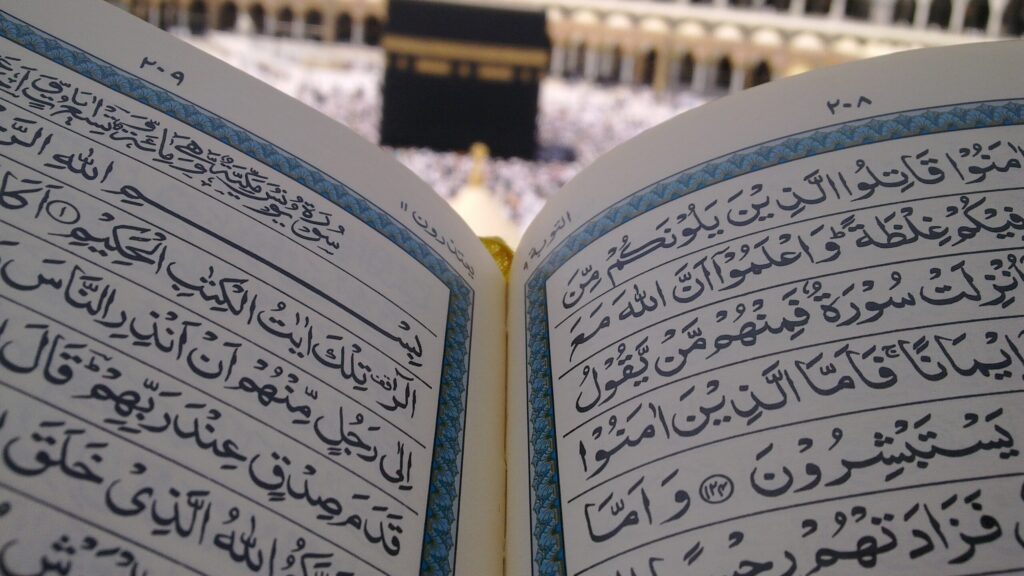
A believer’s relationship with Allah is the highest priority in Islam, forming the foundation for all other relationships.
The Qur’an also commands believers to maintain righteous ties with those who Allah has instructed us to have good relationships with. These include keeping a good relationship with the Prophet (ص), the righteous followers of the Prophet (ص), whether from his family (Ahlul Bayt) or other Sahaba.
Marital Relationships
Marriage is described as a relationship of tranquillity, love and mercy. Husbands and wives are encouraged to treat one another with justice, kindness, and respect.
“And among His signs is that He created for you spouses from among yourselves that you may find tranquillity in them; and He placed between you affection and mercy.” (Qur’an 30:21)
The Qur’an also commands:
“Live with them in kindness (Maroof).” (Qur’an 4:19)
Even during divorce, believers are instructed to act honourably and avoid injustice (Qur’an 2:229).
Relationships with Parents
Honouring parents is one of the greatest duties after worshipping Allah alone. The Qur’an repeatedly commands believers to show gratitude, humility and gentle speech towards parents.
“Your Lord has decreed that you worship none but Him, and that you show kindness to parents.” (Qur’an 17:23)
Believers are instructed to lower “the wing of humility” for their parents and pray:
“My Lord, have mercy upon them as they raised me when I was small.” (Qur’an 17:24)
Relationships with Non-Muslims
The Qur’an encourages justice and kindness towards those who do not persecute Muslims.
“Allah does not forbid you from being kind and just towards those who have not fought you because of religion nor driven you from your homes.” (Qur’an 60:8)
And “O believers! Stand firm for Allah and bear true testimony. Do not let your hatred of a people lead you to injustice (towards them). Be just! That is closer to righteousness (Taqwa). And be mindful of Allah. Surely Allah is All-Aware of what you do”. (Qur’an 5:8)
Dialogue with adversaries, and the ignorant should be conducted respectfully:
“Invite to the way of your Lord with wisdom and good instruction.” (Qur’an 16:125)
Relationships with the Ignorant
Believers are encouraged to respond to ignorance with patience, dignity and restraint rather than in anger.
“The servants of the Most Merciful are those who walk upon the earth humbly, and when the ignorant [foolish] address them, they say, ‘Peace.’ (Qur’an 25:63)
Forgiveness and overlooking offences is a praiseworthy act throughout the Qur’an.
Be gracious, enjoin what is right (Maroof), and turn away from those who act ignorantly. (Qur’an 7:199).
Relationships with Adversaries
Even in conflict, justice remains a divine obligation.
“Do not let the hatred of a people prevent you from being just. Be just; that is nearer to righteousness.” (Qur’an 5:8)
“If they [your enemies] incline towards peace, then incline towards it also.” (Qur’an 8:61)
Relationships with Your Family and Children
The family is viewed as a trust from Allah. Parents are instructed to nurture faith and righteousness within their households.
“O you who believe! Protect yourselves and your families from a Fire whose fuel is people and rocks, over it are appointed angels, harsh and stern; they do not disobey Allah in what He commands them but they do as they are commanded.” (Qur’an 66:6)
Children and spouses are considered a blessing, and a responsibility, but believers are reminded not to allow family ties to distract them from obedience to Allah. Some of your children and wives are enemies to you, so beware, but if you pardon, and overlook, and forgive then Allah is Truly Forgiving. (Qur’an 64:14–15). Strong families built upon faith, compassion and mutual responsibility contribute to strong communities and fulfil the Qur’anic vision of a righteous society.
The topic of relationships in the Quraan is one that can be spoken of at length, and is a theme of great interest and research at the Maroof Institute.
The Maroof Institute is a non-profit charitable organisation. To get in touch use our contact details, and follow our social.